
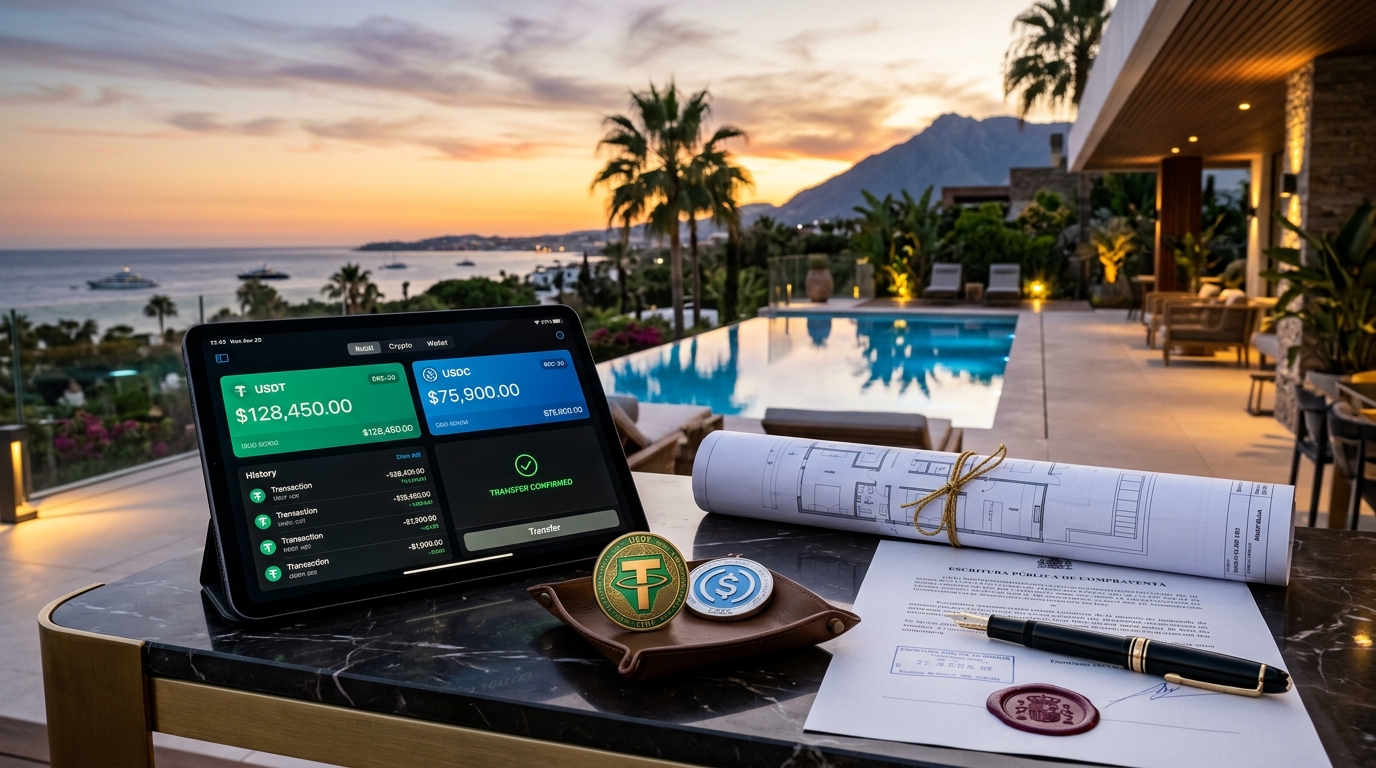
Stablecoins and Marbella property — the questions that matter before you commit
Stablecoins are changing how many digital-asset holders approach real estate. If you hold USDT or USDC and have been wondering whether that liquidity can become the keys to a Marbella villa, the short answer is yes — through a structured, compliance-backed brokerage process. This guide answers the consideration-stage questions behind “USDT real estate purchase” and “buy a house with USDC,” so you know how the transaction typically works before you commit.
Can I really buy a property with USDT or USDC?
Yes. In Marbella, specialist brokers can help fund purchases, sales and — where offered — rentals of property (and related assets such as cars, fine watches and jewellery where offered) using USDT (Tether), USDC and other supported stablecoins. Transacta Brokers coordinates the path from wallet to keys: selection, AML/KYC, crypto-to-fiat through regulated payment rails, and preparation and submission of notary documentation.
Stablecoins are often a strong fit for property because they are designed to track the US dollar, so there is usually less volatility during negotiation than with Bitcoin or Ethereum — though pegs can still move slightly. You bring a known amount of liquidity; the brokerage coordinates settlement so the seller side receives euros; and you can reduce the day-to-day banking friction that often slows international buyers who hold digital assets.
Rental checks follow the rental process; they are not framed as identical to a compraventa.
How is the stablecoin-to-fiat conversion handled?
This is the step most buyers want reassurance on. When you fund a purchase with USDT or USDC, the brokerage coordinates crypto-to-fiat conversion through regulated payment rails as part of the transaction. Settlement via those rails converts to euros (or the agreed fiat) for the seller side.
The key point is that you do not have to run a large DIY conversion alone, hunt for an informal counterparty, or manage the banking leg yourself. Where agreed in writing, rate, timing and fees can be documented as part of one coordinated brokerage process — rather than a string of disconnected steps. The broker prepares and submits notary documentation; the Spanish notary formalises the deed.
What does AML/KYC verification mean for me as a crypto buyer?
Compliance sits at the heart of any legitimate stablecoin property purchase. Because high-value property deals sit under anti-money-laundering (AML) expectations, you will complete know-your-customer (KYC) / customer due diligence (CDD) before contracts, payment or completion.
This is a standard process, not a shortcut to skip. You provide verified identification and source-of-funds / source-of-wealth documentation for your digital assets (including available transaction history where relevant), and — if you buy through a company — UBO disclosure. Think of it as the financial counterpart to title checks on the property. It protects buyer and seller, and it is what separates a genuine brokerage process from an unregulated grey-market deal. If a provider says KYC can simply be skipped, treat that as a red flag.
What legal protection do I hold throughout the transaction?
Buying property with cryptocurrency follows Spanish property-law pathways when you work with a reputable brokerage and qualified lawyers. Purchase agreements and notary processes are followed under Spanish law, and title is transferred in the standard way before a Spanish notary.
From wallet to keys, protection typically rests on:
- A written purchase agreement that reflects the agreed price and terms
- KYC / CDD and source-of-funds compliance before funds and contracts move forward
- Formal notary completion and land-registry registration of the transfer
- A documented settlement record of the crypto-to-fiat conversion through regulated payment rails
Reputable brokers should not ask you to send stablecoins on informal trust alone. Every material step should be documented. Protection depends on the written structure for that deal.
Why Marbella for a stablecoin property purchase?
Marbella has a growing track record of crypto-funded premium property deals and an active international buyer base in areas such as Los Monteros, the Golden Mile and the New Golden Mile. Funding a Marbella purchase with USDT or USDC can turn digital liquidity into a tangible coastal asset through one coordinated process — compliance, conversion via regulated payment rails, and notary documentation — rather than relying on informal peer-to-peer settlement.
Which cryptocurrencies are accepted?
Alongside USDT and USDC, Transacta Brokers accepts Bitcoin, Ethereum and PYUSD for supported purchases. Stablecoins are often the most convenient because of their dollar peg, but Bitcoin and Ethereum buyers are served through the same coordinated conversion and compliance process.
What is the buying process from wallet to keys?
The process is typically organised in four stages:
- Express interest in a property or asset and confirm your stablecoin (or other supported) holdings.
- Complete KYC / CDD and source-of-funds / source-of-wealth verification (before contracts, payment or completion).
- The brokerage coordinates crypto-to-fiat conversion through regulated payment rails so the seller side receives euros.
- Legal completion: notary documentation is prepared and submitted; the notary formalises the deed; keys follow on completion.
Timelines vary. Allow weeks for diligence and legal steps rather than expecting an overnight handover — and be cautious of anyone promising keys in days with no compliance.
Your USDT and USDC questions, answered
Buying property with stablecoins is no longer a niche workaround. For buyers who hold USDT or USDC, it can be a structured, compliance-backed way to put digital liquidity toward real-world assets in Marbella.
Whether you hold USDT, USDC, Bitcoin, Ethereum or PYUSD, Transacta Brokers Marbella handles selection, legal and AML/KYC sign-off, and preparation and submission of notary documentation, and coordinates crypto-to-fiat conversion through regulated payment rails — so you move from digital assets to keys through one coordinated brokerage process.
Tax treatment depends on residency and how conversion is structured. Using stablecoins or other crypto toward a Spanish property purchase can still have reporting and capital-gains implications. Transacta Brokers does not give tax advice — speak with a qualified advisor before you proceed.
Hold USDT or USDC and eyeing Marbella?
Speak with our advisory team about your target property and how a stablecoin-funded purchase can work:
cameron@transactabrokers.com ·
+34 602 495 944 ·
www.transactabrokers.com